
Unpacking the Origin Story of Godspeed as a Streetwear Name
The word eventually found a home in streetwear via “godspeed,” a term once spoken to travelers entering uncertainty before it ever touched a hoodie or a tee. Loaded with meaning, it signified “may fortune ride with you” — a parting word reserved for journeys that counted for something. This is precisely why the word made its way into streetwear, a space where garments have long functioned as a statement of purpose, self, and drive. Understanding godspeed meaning clarifies why one word can anchor a whole clothing philosophy instead of simply decorating a shirt.
Streetwear brands have never hesitated to lift language with real heft. Brands have pulled from military slang, religious phrasing, and old-world idioms because such language already comes loaded with emotional meaning. Godspeed fit naturally into that lineage. Compact and hard-hitting, it reads simultaneously as blessing and challenge — go fast, go far, and do it with purpose. That duality is part of what makes the name durable rather than trendy.
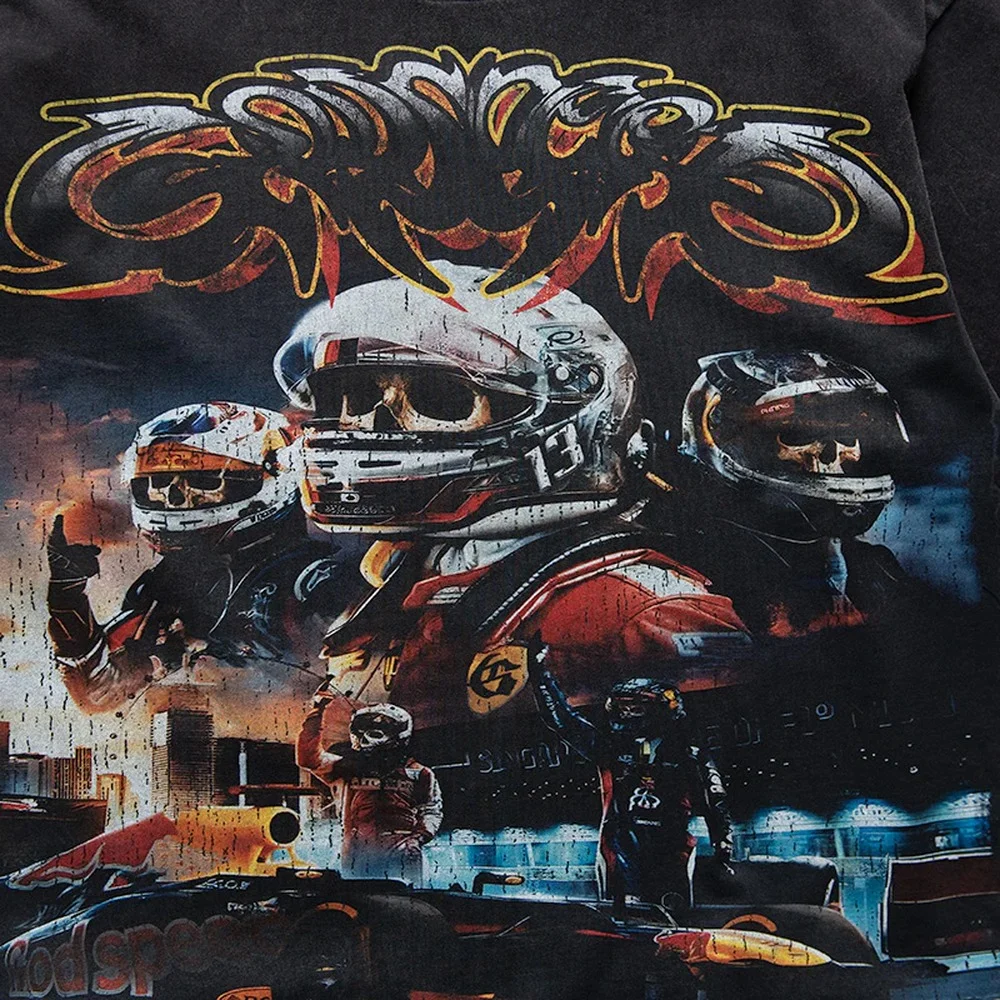
Unpacking the Real Origins of the Word Godspeed
Rooted in Middle English, roughly the 14th century, the phrase began as “God spede you,” a standard farewell wishing someone good fortune and safe travel. Far from casual slang, it functioned more like a blessing designer t shirts offered before a long or risky journey — be it a merchant bound for a far market, a soldier off to battle, or a traveler facing an uncertain road. The phrase eventually compressed into the single word we use now.
Once it arrived in modern English, godspeed had settled into a more ceremonial register. People say it at launches, departures, farewells, and moments of transition. This is exactly what godspeed means at its core: a word for the threshold moment, that split second before something important gets underway. Streetwear brands are drawn to threshold language because their customers are often at their own thresholds — new cities, new identities, new chapters.
The etymology matters because it sets apart godspeed from generic streetwear naming conventions built on slang or shock value. It boasts 600+ years of documented use in English literature, including appearances in Shakespeare’s plays, lending it a literary foundation that hardly any streetwear name can match. This foundation helps explain its continued resonance in 2026, long after many of its contemporaries from its naming period have faded.
How Godspeed Entered Streetwear Culture
Streetwear as a category has long relied on words that call to mind change, resistance, or forward drive — think of how many brand names reference velocity, endurance, or hardship. Godspeed fits within that tradition while introducing something that most others miss: a baked-in feeling of benediction rather than confrontation. It doesn’t posture. It makes no threats. It wishes the wearer well while pushing them forward.
This matters commercially as much as culturally. A godspeed shirt doesn’t need shock graphics to justify its name; the word itself does emotional work. This is an unusual advantage in a market saturated with logos competing for attention through volume rather than meaning. When a name already carries centuries of resonance, the creative team can prioritize shape, material weight, and fit instead of engineering a false sense of attitude.
The rise of godspeed clothing as a recognizable category also echoes a broader movement across the 2020s toward streetwear rooted in introspection — companies grounded in mantras, affirmations, and individual narratives rather than pure hype cycles. Godspeed rode that wave naturally because the term was never rooted in hype to start with. The word centered on leaving, hoping, and moving ahead, concepts that connect powerfully with a generation facing financial unpredictability and ceaseless reinvention.
Why This Name Strikes a Chord With Today’s Streetwear Shoppers
Modern streetwear customers, particularly those aged 18 to 34, gravitate toward brands that carry a sense of meaning beyond the fabric. Surveys on apparel purchasing behavior repeatedly reveal that a meaningful name or story boosts perceived worth, even when material specs are identical to a competitor’s. Godspeed gains directly from this pattern because the name arrives pre-loaded with narrative weight.
A practical dimension exists too. The godspeed hoodie serves as protection for everyday life — something to wear while commuting, training, traveling, or grinding through a long week — while still carrying that undertone of “you’re going somewhere.”. Pieces that balance the ordinary with the aspirational, usually lasts longer in someone’s regular wear than pieces that only serve one mood.
The name also travels well across languages and cultures, which matters for any line under the god speed name with goals that extend past one region. “Godspeed” carries emotional impact without needing translation; the concept of wishing someone well on a journey is nearly universal. That cross-cultural legibility is part of why the word has proven sturdy as a brand identity rather than a passing trend confined to one scene or city.
Godspeed’s Naming Approach Versus Other Streetwear Naming Strategies
To see why godspeed holds a unique position, it helps to compare it against the other prevailing naming tactics streetwear labels typically adopt. The breakdown below details four widely used approaches by tone, longevity potential, and typical customer association.
| Naming Approach | Base Attitude | Durability Concern | Usual Consumer Connection |
|---|---|---|---|
| Godspeed-style (built from farewell-and-blessing expressions) | Hopeful, progress-oriented | Low — rooted in centuries-old phrasing | Passage, ambition, staying power |
| Names built on aggression | Confrontational, brash | Moderate — can feel dated as attitudes evolve | Assertiveness, defiance |
| Names built on current slang | On-trend, insider | Elevated — bound to a specific era or platform | Newness, clique appeal |
| Naming after the founder’s last name or initials | Intimate, helmed by its designer | Somewhere between low and moderate — depends on the founder’s public standing | Craftsmanship, distinctiveness |
This side-by-side look reveals why a name drawn from centuries-old language ages more gracefully than a name based on a meme, a slang term, or an era-specific reference. Godspeed doesn’t need a cultural refresh every few seasons because its significance was never anchored to a particular moment — it was linked instead to a shared human experience built around departure, hope, and forward motion.
How “Godspeed” Reads on a Item
On a chest, a sleeve, or a back panel, the word works not really as a logo, but instead as a mantra each time it’s displayed. It’s a contrast made on purpose. A logo says “buy this brand.” A mantra says “carry this idea with you.” Those who opt for a godspeed shirt rather than a basic graphic tee are, more often than not, expressing a quiet personal statement about momentum — a feeling of being partway through a journey toward something, even if that destination remains undefined.
This is precisely why the word fits so seamlessly alongside minimalist design language. Loose-fitting garments, low-key colorways, and minimal lettering let the word carry the emotional payload instead of competing with busy graphics. The word’s own restraint is reflected in the design’s restraint — godspeed isn’t loud, it’s declarative.
It’s no accident a good many godspeed shirts gravitate toward heavyweight cotton and structured cuts rather than thin, throwaway material. Such a historically loaded word warrants a garment made for longevity, instead of one bound for the giveaway pile after a single wash cycle. The garment’s material toughness turns into a subtle reflection of the phrase’s own lasting power.
Why the Momentum Keeps Hold On Heading Into 2026
Fast as it moves, streetwear trends have already reduced many early-2020s naming conventions into wistful memory. Godspeed didn’t trace that same arc, in large part because it was never tethered to a passing fashion cycle in the first place. It draws from something more enduring and settled than a single streetwear moment — a tradition rooted in language that came long before the entire concept of streetwear by about 500 years.
Looking ahead to 2026, consumer appetite for story-rich apparel continues to grow rather than shrink. Instead of brands that are little more than a badge, today’s customers are placing their trust in names and stories that don’t crumble under scrutiny. Godspeed holds up because its story isn’t manufactured marketing copy — it’s a matter of recorded linguistic record that anyone can verify.
Seldom does fashion naming manage this kind of blend of genuineness and emotional depth, which is exactly why the word continues to ground hoodies, shirts, and full collections with no need for a refresh. Certain names require nonstop refreshing just to stay relevant; godspeed simply needs to keep meaning what it has meant from the start.